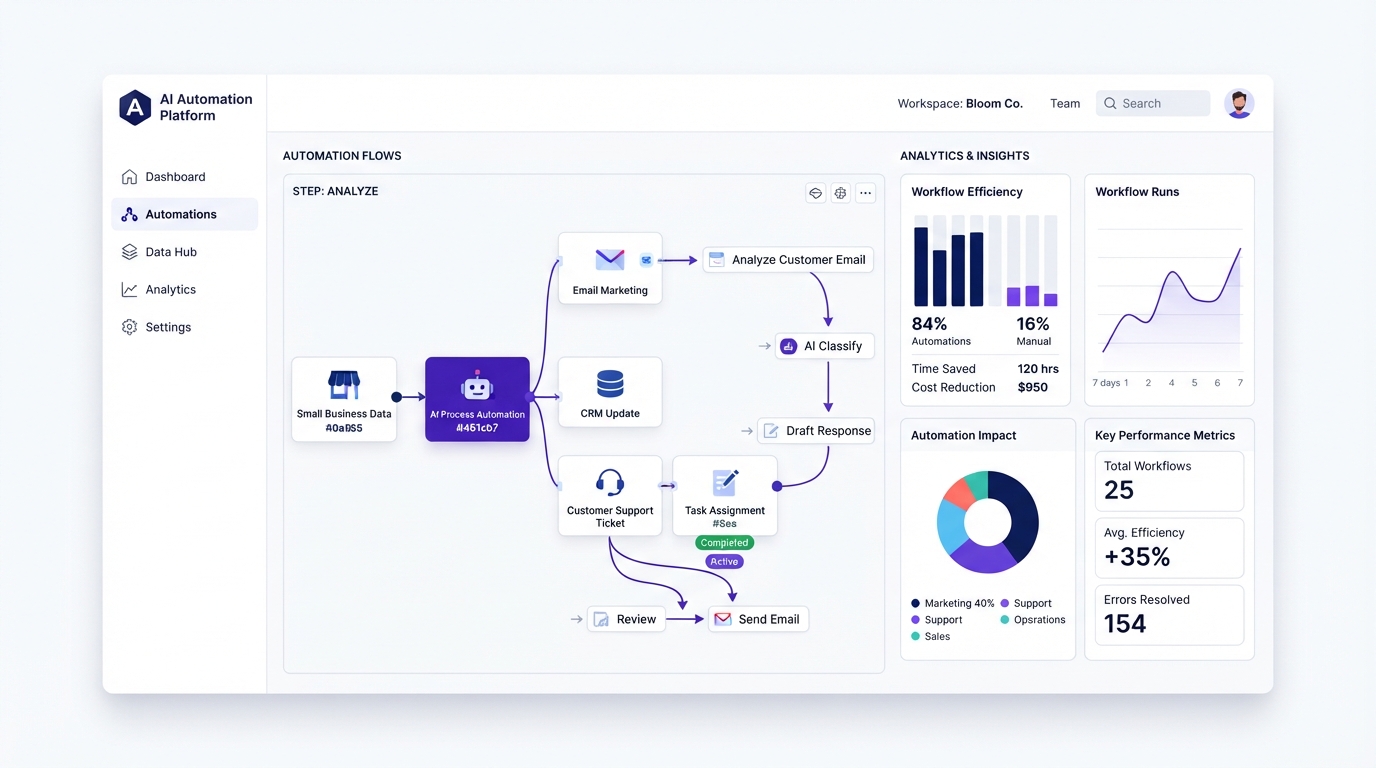
Small businesses are increasingly turning to AI automation to streamline operations, reduce manual work, and capture more leads. In this guide, we break down exactly how AI-powered tools can transform your business — from automating follow-ups to building intelligent workflows that run 24/7.
What Is AI Automation?
AI automation combines artificial intelligence with workflow automation to handle repetitive tasks that previously required human intervention. Instead of manually sending follow-up emails, updating CRM records, or qualifying leads, AI systems can perform these actions automatically — and often more accurately than a human could.
For small businesses, this means fewer hours spent on administrative work and more time focused on growth. According to McKinsey's research on generative AI, AI automation could add up to $4.4 trillion in annual productivity value to the global economy. Small businesses that adopt these tools early gain a significant competitive advantage.
How AI Saves Time for Small Businesses
Time is the most valuable resource for any small business owner. AI automation saves time across several key areas:
1. Automated Lead Follow-Ups
When a new lead comes in, AI can instantly send a personalized email or SMS, schedule a follow-up task, and even book a meeting — all without human involvement. This eliminates the gap between lead capture and first contact, which is where most businesses lose opportunities.
2. CRM Data Entry and Management
Manually updating CRM records is tedious and error-prone. AI automation tools can automatically enrich lead data, update contact records, move deals through pipelines, and flag high-priority opportunities.
3. Content Scheduling and Social Media
AI tools can generate social media post ideas, schedule content across platforms, and even analyze which posts perform best. This allows small teams to maintain a consistent presence without spending hours each week on content management.
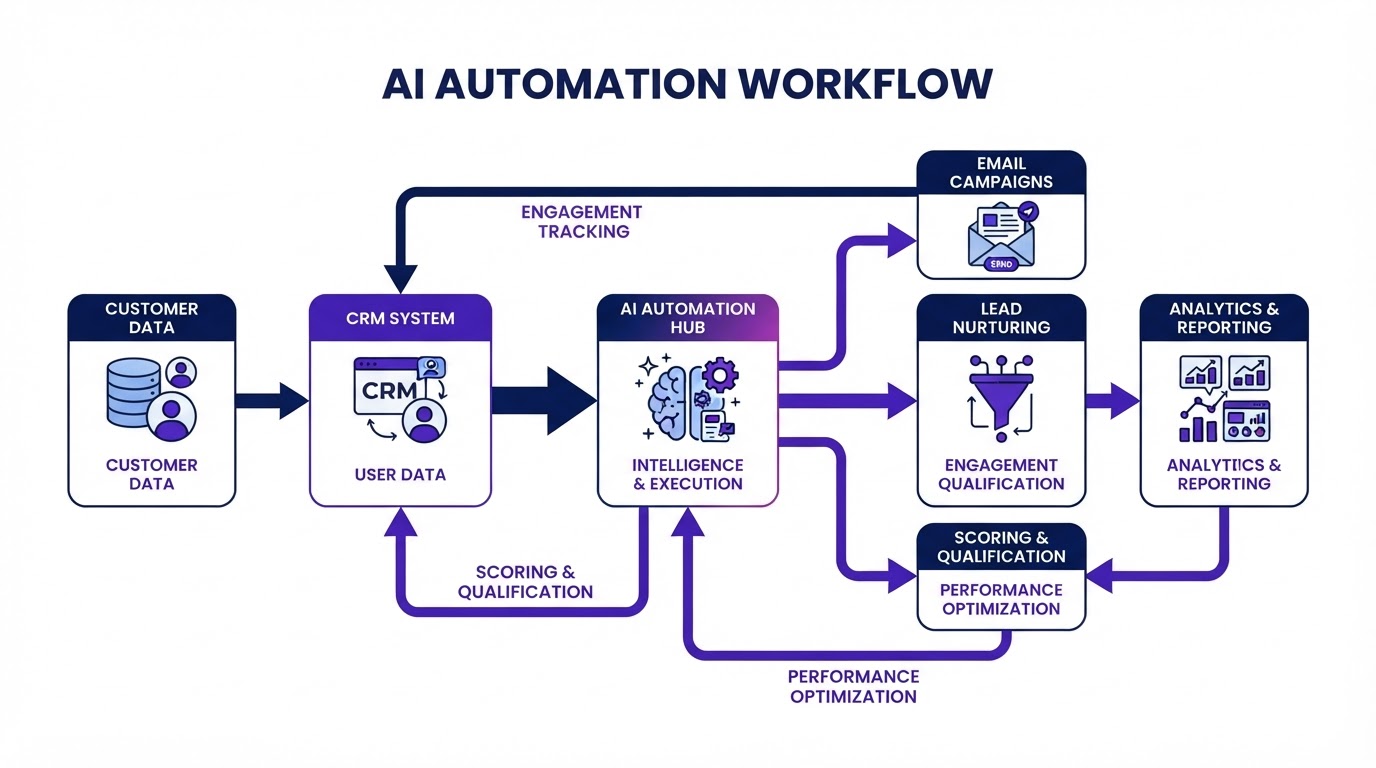
AI automation connects your CRM, email, and lead nurturing into one seamless workflow.
Generating More Leads with AI
Beyond saving time, AI automation directly impacts lead generation. Here's how:
AI-Powered Chatbots
Modern AI chatbots can qualify leads, answer questions, and book appointments 24/7. They engage website visitors the moment they arrive, capturing leads that would otherwise leave without a trace. According to Salesforce's State of Service report, 77% of customers expect AI-powered interactions to become more common in the coming years.
Smart Lead Scoring
AI can analyze lead behavior — page visits, email opens, form submissions — and assign a score based on likelihood to convert. This helps sales teams prioritize high-value leads instead of treating every contact equally.
Automated Email Sequences
Instead of sending generic blasts, AI automation enables behavior-triggered email sequences. A lead who downloads an ebook gets a different follow-up than one who watches a demo video. This level of personalization significantly improves conversion rates.
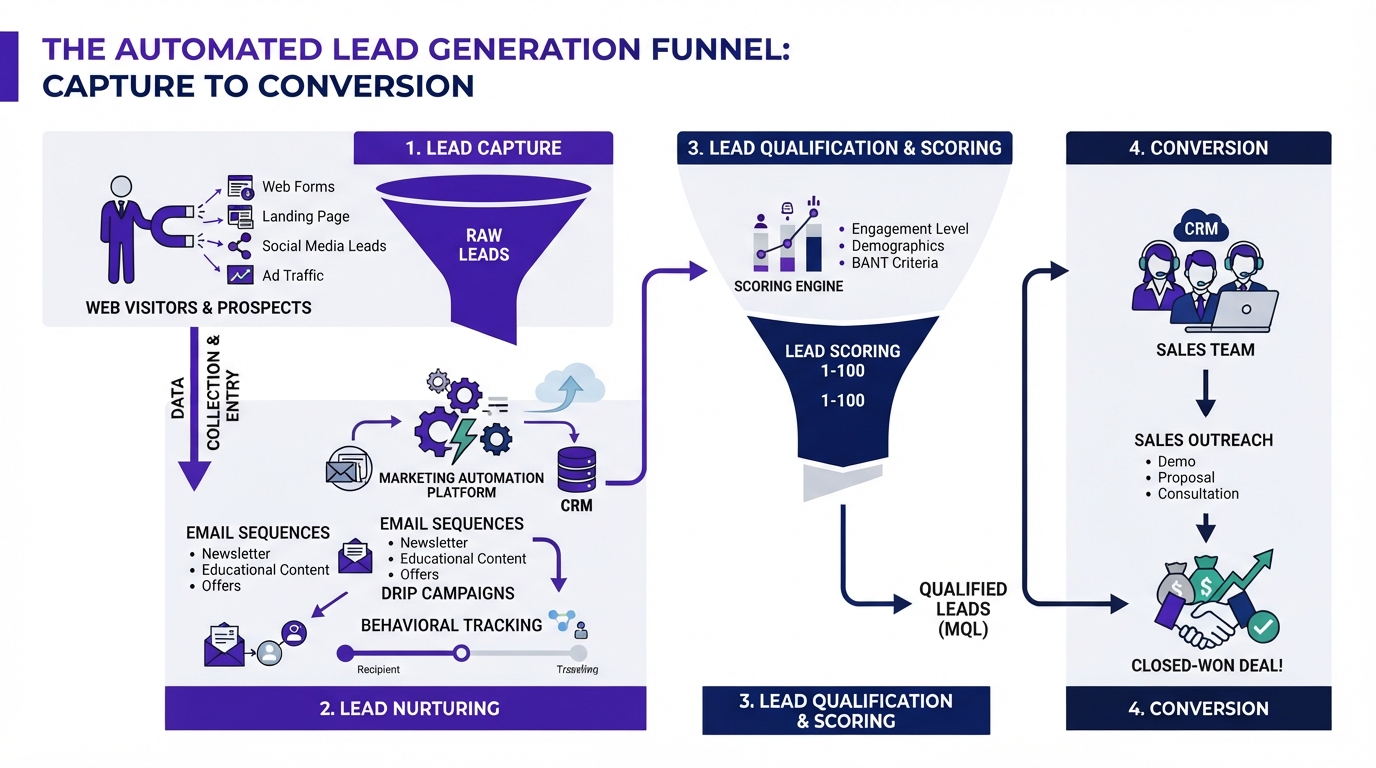
A well-designed AI lead funnel captures, nurtures, and converts leads automatically.
Real-World Automation Examples
Here are practical ways small businesses are using AI automation today:
- Real estate agencies use AI to automatically send property recommendations based on a client's search history and preferences.
- E-commerce stores deploy AI chatbots to recover abandoned carts and answer product questions in real time.
- Service businesses automate appointment reminders and follow-ups, reducing no-shows by up to 40%.
- Marketing agencies use AI to generate reports, schedule campaigns, and optimize ad spend.
- SaaS companies automate onboarding sequences that guide new users through product features step by step.
How to Get Started with AI Automation
Getting started with AI automation doesn't have to be complicated. Here's a simple framework:
Step 1: Identify Repetitive Tasks
List every task your team does repeatedly — follow-ups, data entry, scheduling, reporting. These are your automation candidates.
Step 2: Choose the Right Tools
Platforms like n8n, Zapier, Make, and Pabbly make it easy to connect your existing tools and build automation workflows without coding.
Step 3: Start Small and Scale
Don't try to automate everything at once. Pick one high-impact workflow — like lead follow-up — and build it first. Once it's running smoothly, expand to other areas.
Step 4: Monitor and Optimize
AI automation isn't "set it and forget it." Regularly review your workflows, check conversion rates, and adjust as your business grows.
Want to automate your business but not sure where to start?
CoreUptech specializes in building custom AI automation systems for small businesses. From CRM workflows to lead generation funnels, we handle everything end-to-end.
Book a Free Strategy CallFrequently Asked Questions
How much does AI automation cost for a small business?
The cost depends on the complexity of your workflows and the tools you choose. Many automation platforms offer free tiers, and most small businesses can start with a budget of $50–$200/month. Custom automation builds typically range from $500–$5,000 depending on scope.
Do I need coding skills to use AI automation?
No. Tools like Zapier, Make, and Pabbly offer visual, no-code builders. However, for more complex integrations, working with an experienced automation team ensures your workflows are built correctly the first time.
How long does it take to set up AI automation?
Simple automations can be set up in a few hours. More complex systems with multiple integrations, CRM workflows, and custom logic typically take 1–3 weeks to fully implement and test.
Will AI automation replace my employees?
AI automation is designed to handle repetitive tasks, not replace human judgment. It frees your team to focus on higher-value work like strategy, relationship building, and creative problem-solving.